The first task of many businesses is collecting customer information. Before an AI Agent can perform this task, the business owner must explain exactly what information is collected, when it is collected, and how it is used.
The AI Foundation Australia uses the following framework to document the process.
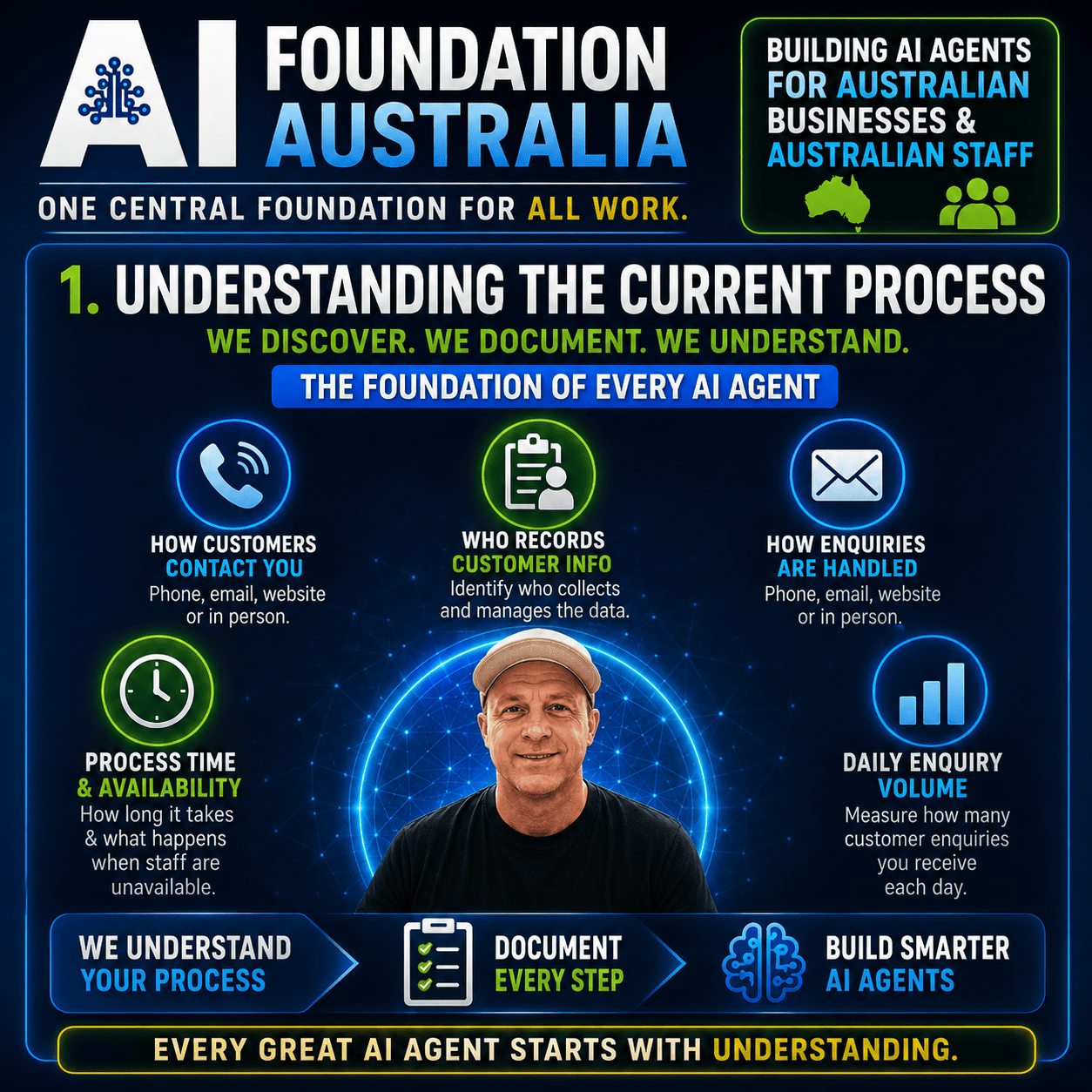
Section 1: Understanding the Current Process
- How do customers contact your business?
- Who currently records customer information?
- Is the process completed over the phone, email, website, or in person?
- Is the process the same every time?
- Approximately how many customer enquiries do you receive each day?
- How long does it take to record customer details?
- What happens if staff are unavailable?
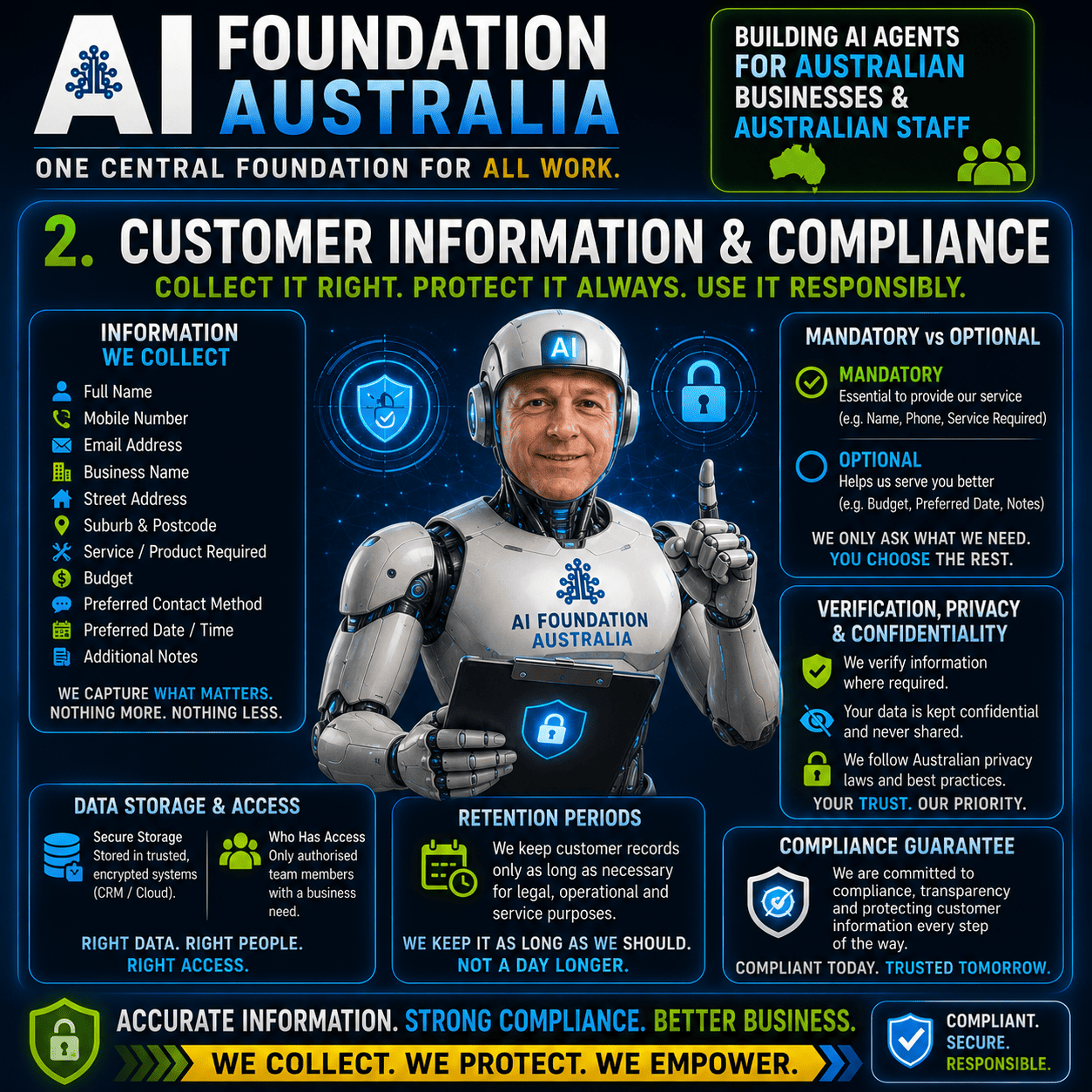
Section 2: Customer Details Collected
Ask the business owner:
“What information do you collect from every customer?”
Examples:
- Full Name
- Mobile Number
- Email Address
- Business Name
- Street Address
- Suburb
- Postcode
- Preferred Contact Method
- Product or Service Required
- Budget
- Preferred Appointment Date
- Additional Notes
Section 3: Process Questions
- What is the first question you ask a customer?
- What is the second question?
- What information is mandatory?
- What information is optional?
- What happens if a customer refuses to provide information?
- Do you need to verify any information?
- Is any information considered confidential?
- Where is the information stored?
- Who has access to the information?
- How long do you retain customer records?
Section 4: AI Planning Questions
- Could an AI Agent ask these questions?
- Could the AI Agent ask them in a different order?
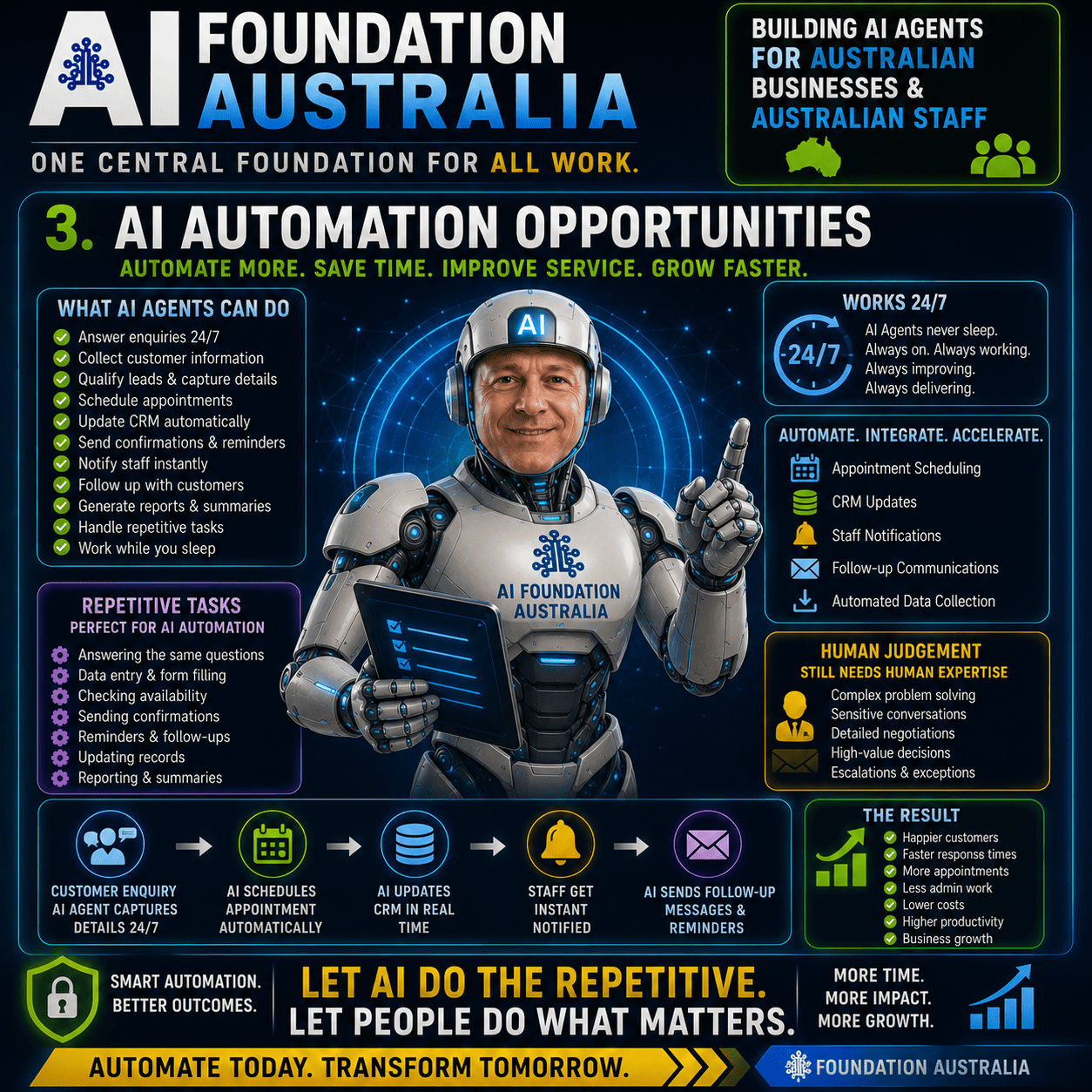
- Could the AI Agent complete this process 24/7?
- Could the AI Agent save the information automatically?
- Could the AI Agent notify staff immediately?
- Could the AI Agent schedule appointments?
- Could the AI Agent send follow-up messages?
- Which questions require human judgement?
- Which questions are repeated every day?
- Which questions take the most time?
Converting the Process into AI Instructions
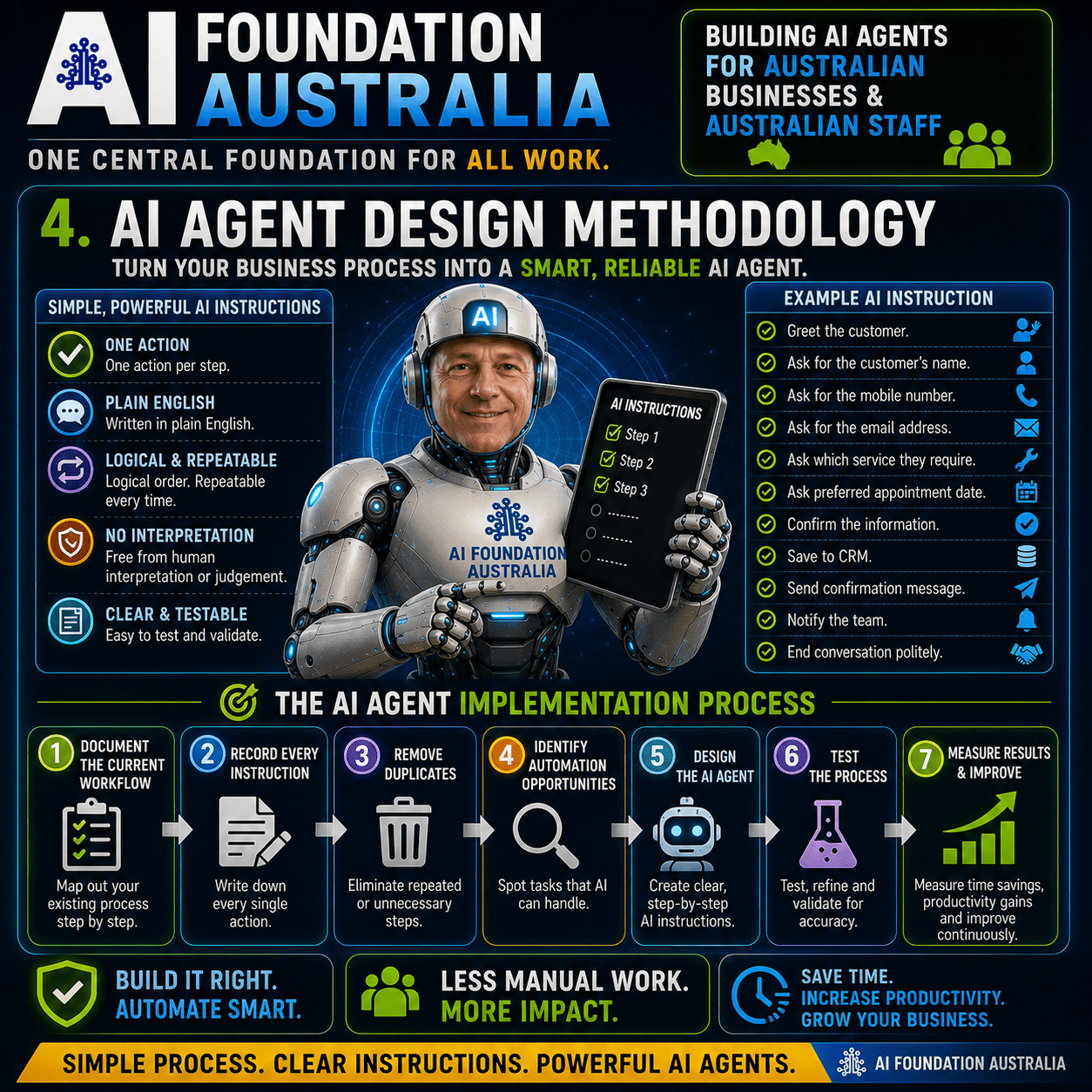
Once the business owner answers the questions, we convert the information into simple instructions.
Example: Current Human Process
“I answer the phone, ask for their name, phone number, email address, what service they need, and when they would like the work completed.”
AI Instructions
- Greet the customer.
- Ask for the customer’s full name.
- Ask for the customer’s mobile number.
- Ask for the customer’s email address.
- Ask which service they require.
- Ask when they would like the work completed.
- Ask if they have any additional information.
- Confirm the information with the customer.
- Save the information to the CRM.
- Send a confirmation message to the customer.
- Notify the business owner.
- End the conversation politely.
AI Instruction Writing Rules
Every instruction should:
- Contain one action only.
- Be less than one sentence.
- Be written in plain English.
- Be completed without human interpretation.
- Follow a logical order.
- Be repeatable every time.
Good Examples
- Ask for the customer’s name.
- Save the customer’s phone number.
- Check calendar availability.
- Send a confirmation email.
- Notify the sales team.
Bad Examples
- Determine whether the customer seems suitable.
- Make a decision about pricing.
- Use common sense when answering.
- Decide if the customer is important.
If an instruction requires judgement, it should usually remain with a human.
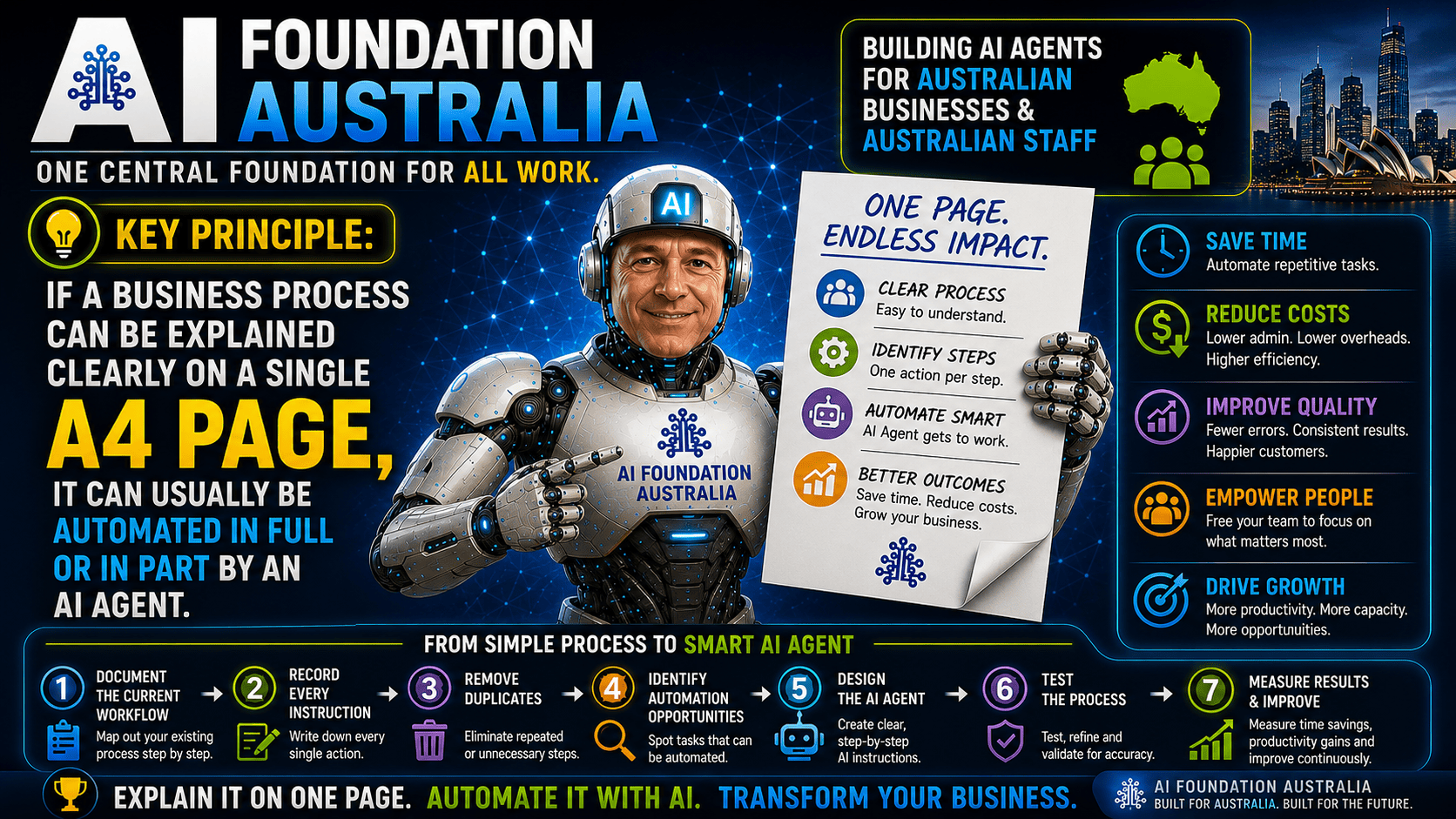
AI Foundation Australia Methodology
Step 1
Ask the business owner:
“Can you explain your process as if you were training a new employee on their first day?”
Step 2
Write down every instruction.
Step 3
Remove duplicate steps.
Step 4
Identify repetitive tasks.
Step 5
Determine which tasks can be automated.
Step 6
Design the AI Agent.
Step 7
Test the process.
Step 8
Measure time savings and productivity gains.
The AI Foundation Australia believes that if a business process can fit onto a single A4 page and be explained using simple instructions, then an AI Agent can usually perform all or part of that process. The result is a business that is more efficient, more productive, and better equipped to serve customers while allowing staff to focus on the work that matters most.